Shapes of Comedy
Does comedy have a shape to it?
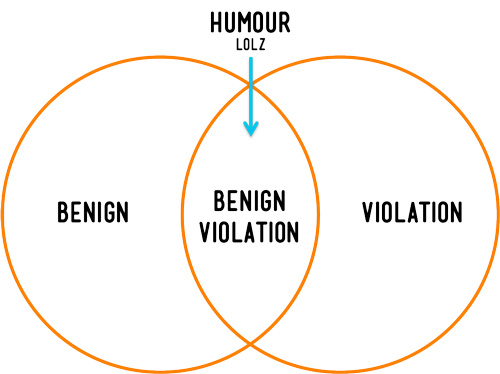
According to Benign Violation Theory (BVT) by Peter McGraw what makes things funny is the juxtaposition of something boring and something violating. That tension is expressed through laughter.
 Picture of Peter McGraw from a 2011 Wired article. Image Source
McGraw gives three conditions for something to be funny.
- a situation is a violation;
- the situation is benign; and
- both perceptions occur simultaneously
McGraw’s image shows the juxtaposition of an angry doctor. This is the violation, because we expect doctors to make us feel warm and comforted. Just do a quick Google search. All the doctors are smiling.
His image is also benign. It is just a picture. He isn’t standing infront of us angrily staring. Then we notice the diguse hanging from his pocket. It’s funny.
Another example is tickling. Tickling is funny because it is both physically threatening and a harmless attack. The natural physiological response is a rush of endorphins.
McGraw also presents the concept of distance. …
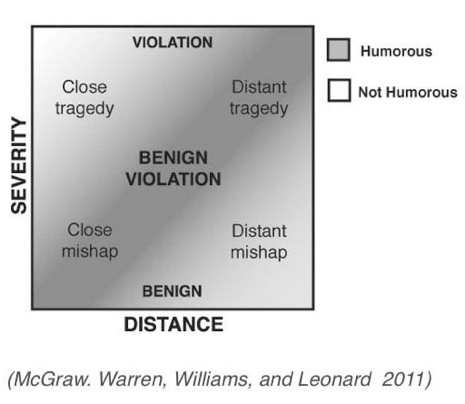 Benign Violation shown with severity and distance.
Can we see this structure in comedy, for example, Kevin Hart’s specials on Netflix?
Sentiment Analysis
Kevin Hart broken into mainstream comedy with his hit 2010 comedy special “Seriously Funny”. His repeated success has placed Hart at the top of Forbes list of highest paid comedians. Not to be confused with the richest comedian, where he sits at 15th.
… he continues to prove he is funny … But we need not limit ourselves to one comedian. Let’s look at the top comedy specials.
BVT says that Hart must be a master of juxtaposing benign violations. What is the sentiment of comedy?